





-
- Peccary boar leather (Finnish: peccary)
- The country of origin of the leather is Peru
- The leather is obtained as a by-product of the food industry
- 55% Cashmere, 45% wool blend lining
- Cuff length 2" (approx. 5cm), covers the wrist
- Elastic at the wrist
- Handmade machine-sewn counter-seam
- Made using the table cutting method
- European craftsmanship
- Over 100 craftsmanship steps
The Rolls-Royce of gloves and leathers is a classic glove handcrafted from Peccary boar leather. This is a glove that is passed down from generation to generation, from mother to daughter.
This glove combines two lovely luxury materials, peccary and cashmere. The good thermal insulation of both materials makes these gloves great winter gloves that warm your hands even in severe frosts. The breathability of natural materials makes the gloves comfortable to wear throughout the winter.
Peccary wild boar leather is naturally thick and reindeerus, so it insulates well. Peccary wild boar leather is characterized by a beautiful matte surface. The velvety soft leather has the patterns left by the hair tufts typical of peccary - three adjacent small dots. The personal nature of gloves made from wild animal leather also includes small traces of life, so each pair is unique. Peccary leather is very durable and patinated beautifully over time, so these gloves are a joy to wear for years.
In addition to being perfect for gloves, peccary leather is also valuable because of its limited availability. Peccary leather comes from Peru, which is the only country allowed to sell this valuable leather. Indigenous communities living in the Amazon jungle hunt the animal for its meat. Hunting a CITES-protected animal is only allowed for survival. In other words, wild boars are not hunted for their skin, the skin is only a by-product. Each pair is unique, because the skins of wild animals also reflect the life lived by the animal.
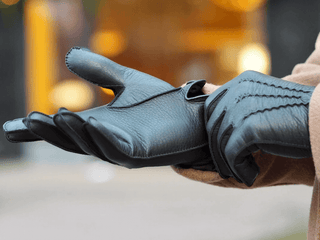
The traditional model has three decorative stitches on the back of the palm. The shaft of the glove covers the wrist. The slender wrist fits well inside the sleeve of a jacket. There is an elastic band on the wrist to increase the fit of the wrist. There are three decorative stitches on the back of the palm, which add a sophisticated decoration to the glove. Peccary wild boar leather is relatively thick and therefore the gloves are sewn with a counter-seam, meaning the seam is as if on the outside.
Over 100 meticulous handwork steps and high-quality materials make these gloves a great investment.
Sewing is very precise and time-consuming. The gloves should initially fit very snugly so that they shape themselves to fit the user's hand. The most important step in determining the fit of the gloves is cutting the leather. Using the centuries-old table cutting method, the gloves are given the right fit. Excess stretch is stretched out of the leather, leaving only the adjustment margin that ensures an excellent fit. This ensures that the gloves do not stretch even after prolonged use, but retain their fit. Each leather is processed individually.
The skins of relatively small wild animals are often defective, have many signs of life and even holes. Cutting the leather resembles a puzzle when an experienced cutter finds the right suitable areas of leather for each part of the glove. Fortunately, leather can be used carefully, because gloves have many small parts between the fingers.
The lining inside the glove is practically a glove inside the glove. In use, leather lasts longer than a knitted lining, so to extend the life of the gloves, it is possible to replace the lining with a new one if necessary.

- Peccary boar leather (Finnish: peccary)
- The country of origin of the leather is Peru
- The leather is obtained as a by-product of the food industry
- 55% Cashmere, 45% wool blend lining
- Cuff length 2" (approx. 5cm), covers the wrist
- Elastic at the wrist
- Handmade machine-sewn counter-seam
- Made using the table cutting method
- European craftsmanship
- Over 100 craftsmanship steps
The Rolls-Royce of gloves and leathers is a classic glove handcrafted from Peccary boar leather. This is a glove that is passed down from generation to generation, from mother to daughter.
This glove combines two lovely luxury materials, peccary and cashmere. The good thermal insulation of both materials makes these gloves great winter gloves that warm your hands even in severe frosts. The breathability of natural materials makes the gloves comfortable to wear throughout the winter.
Peccary wild boar leather is naturally thick and reindeerus, so it insulates well. Peccary wild boar leather is characterized by a beautiful matte surface. The velvety soft leather has the patterns left by the hair tufts typical of peccary - three adjacent small dots. The personal nature of gloves made from wild animal leather also includes small traces of life, so each pair is unique. Peccary leather is very durable and patinated beautifully over time, so these gloves are a joy to wear for years.
In addition to being perfect for gloves, peccary leather is also valuable because of its limited availability. Peccary leather comes from Peru, which is the only country allowed to sell this valuable leather. Indigenous communities living in the Amazon jungle hunt the animal for its meat. Hunting a CITES-protected animal is only allowed for survival. In other words, wild boars are not hunted for their skin, the skin is only a by-product. Each pair is unique, because the skins of wild animals also reflect the life lived by the animal.
The traditional model has three decorative stitches on the back of the palm. The shaft of the glove covers the wrist. The slender wrist fits well inside the sleeve of a jacket. There is an elastic band on the wrist to increase the fit of the wrist. There are three decorative stitches on the back of the palm, which add a sophisticated decoration to the glove. Peccary wild boar leather is relatively thick and therefore the gloves are sewn with a counter-seam, meaning the seam is as if on the outside.
Over 100 meticulous handwork steps and high-quality materials make these gloves a great investment.
Sewing is very precise and time-consuming. The gloves should initially fit very snugly so that they shape themselves to fit the user's hand. The most important step in determining the fit of the gloves is cutting the leather. Using the centuries-old table cutting method, the gloves are given the right fit. Excess stretch is stretched out of the leather, leaving only the adjustment margin that ensures an excellent fit. This ensures that the gloves do not stretch even after prolonged use, but retain their fit. Each leather is processed individually.
The skins of relatively small wild animals are often defective, have many signs of life and even holes. Cutting the leather resembles a puzzle when an experienced cutter finds the right suitable areas of leather for each part of the glove. Fortunately, leather can be used carefully, because gloves have many small parts between the fingers.
The lining inside the glove is practically a glove inside the glove. In use, leather lasts longer than a knitted lining, so to extend the life of the gloves, it is possible to replace the lining with a new one if necessary.
Eurooppalaista käsityöosaamista ja eettinen hankinta
Sitoutuminen laatuun ja käsityöperintöön
Käsineemme valmistetaan käsityönä Unkarissa kauniissa Pecs-nimisessä kaupungissa, joka on maailman laatukäsineiden valmistuksen osaamisen keskus. Käsineiden valmistus on erittäin arvostettu käsityöala, ja alansa parhaiden käsinevalmistajien työolot ovat kunnossa ja EU-lakien mukaiset. Käytämme ainoastaan nahkaa, joka saadaan ruokatuotannon sivutuotteena (kuten lammas) ja/tai kannanhallinnan seurauksena (kuten hirvi). Tarhattujen eläinten turkiksia emme käytä.
Meille prioriteettina on valmistaa laadukkaita ja pitkäikäisiä asusteita. Seuraamme kuitenkin tarkasti myös vegaanisten materiaalien kenttää, ja tulevaisuudessa saattaakin olla mahdollista valmistaa vegaanisia käsineitä. Materiaalit hankitaan luotettavilta yhteistyökumppaneilta, jolloin tuotantoketjun vaiheet ovat tiedossa.
Huippulaatua ja pitkä käyttöikä
Suunniteltu kestämään
Kestävistä materiaaleista ja huolellisella käsityöllä valmistetut käsineet kestävät käytössä pitkään. Kannustamme tuotteidemme mahdollisimman pitkäaikaiseen käyttöön, ja opastammekin käsineiden huollossa ja korjauksessa. Esimerkiksi käsineiden luonnonkuituiset vuorit on mahdollista vaihtaa, mikä lisää käsineiden käyttöikää entisestään. Vuorinvaihto- ja käsineiden korjauspalvelu toimivat myymälämme kautta.
Kestävyyteen liittyy lisäksi tyylin ja muotoilun kestävyys. Klassisena asusteena käsineet eivät ole kiinni sesongeittain vaihtuvissa trendeissä, vaan käsineet palvelevat käyttäjänsä pukeutumista koko niiden elinkaaren ajan.

Korkealaatuista käsityötä jo lähes sadan vuoden ajan

Tarkkuudella tehty viimeistely